Tuesday, June 3, 2014

Food Storage

This morning I cleared the last of the lettuce out of this bed. It will have melons seeded in here in a few days, but earlier it was the radish, turnip, and lettuce bed. When I clear out a bed like this I get lot of produce all at once. It is nicer to be able to harvest just for a couple of days as it keeps my fridge more manageable, but sometimes I need to store large quantities of produce.

I use two big tubs. I don't wash the produce when I store it like this. And I put a towel on the bottom. This keeps veggies that need to be stored for a long time from rotting (from sitting in condensation), but keeps them moist.

Today I was also pulling out the overwintered kale and picked off all of the kale blossoms. This is one of my medium sized plastic containers that I use for storage. This container also has a towel on the bottom. A long time ago I cut down some old kitchen towels to just fit the containers I have and I use them constantly.

My fridge is now packed with all sorts of containers. Not as packed as it sometimes gets. I gave a lot away to my townhouse mates and when harvesting really brings in too much, I'll be emailing the neighbors and trying to get rid of it. Then I bring out my cooler to store things in until I can get them to pick it up. Gardening always seems to leave me with either too much or to little of things. Or maybe I just don't notice the times when things are just right.

Now that you are peeking into my fridge, you can see what I keep in there. Some things are kind of weird. Like on the top left, you can see a jar with almonds and water in it. I make my own almond milk. I used the last of my milk this morning so I soak the almonds for a day before I make more. I make my own for a couple of reasons. The first is because I walk and bike to shop. Carrying almonds home is easier, especially if I'm walking. Carrying liquids home can be painful on the shoulders. The other is that you can't find plain almond milk. Mine is nothing but almonds and water, but the commercial varieties insist on putting all sorts of weird things in it. On the top right shelf and all the way to the back you will see my seed collection in an air tight container. Or at least most of my seed collection. Yes I waste fridge space to store my seeds. If I'm desperate for space I can always take them out, but my seeds are precious. To the left way behind the tea is a small batch of ginger wine. Norma taught me to preserve my ginger that way. And I love the sake flavored with ginger for cooking too.

And my favorite thing in the fridge is the lower box of eggs. The other boxes of eggs are nice enough for store bought eggs (the farmers markets don't start for another week around here - June 11th for the Arlington one). But those are lovely pastured eggs from one of my townhouse mates' friends. She owns a farm in New Hampshire. Her eggs are better than any I've found at the farmers market. Even if I had my own chickens they wouldn't be as good as I just don't have the land for them to eat that many natural things. Yum. My husband won't be home for dinner on Wednesday and I'm contemplating making Dave's wife's spinach pie for the first time, but I'll need to get to the store for cottage cheese. I hope it happens.

Monday, June 2, 2014

Harvest Monday, 2 June 2014

There were a lot of baskets of greens this week from lettuce and spinach to mizuna and bok choy. The nice head of Paris Island romaine and Fun Jen went to my townhouse mates. As did the first picking of Swiss chard and a lot of the mizuna. I had to pick the bok choy as it was starting to bolt. I think the tatsoi has to come out too. The direct seeded version of both are getting bigger which is good. I'm supposed to be planting my corn here by the end of the week. So if they aren't big enough by then, I'll be eating baby bok choy.

Though I have to say, I really like it big baby bok choy as it is perfect for grilling. I just cut it in half or quarters and throw a simple dressing on it. So tasty.

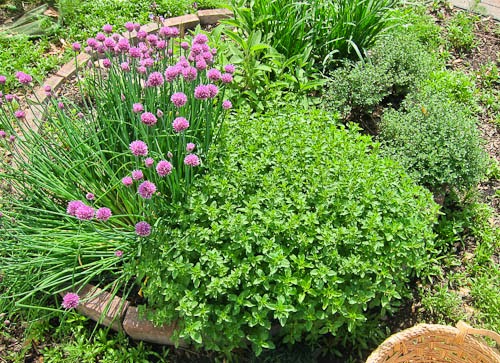
There were quite a few herbs in the harvest this week. The oregano has been dried. I have get to the other half of the patch and dry that this week.

And I picked the first batch of salad turnips. I say salad turnips, but half of them were eaten cooked - lightly sauteed in butter. Oh they were good. I wonder if they grill well. I might have to try that with the batch I'm going to pick this week.

And last but hardly least are the first two strawberries. Oh how I love strawberries.
  • Alliums: 0.04 lbs
  • Greens: 7.27 lbs
  • Asian Greens: 3.97 lbs
  • Herbs: 0.64 lbs
  • Roots: 0.76 lbs
  • Weekly Total: 12.68 lbs
  • Yearly Total: 28.17 lbs
  • Yearly Tally: $-406.53

  • Fruit
  • Strawberries: 0.07 lbs
  • Yearly total: 2.21 lbs, $6.67

Harvest Monday is a day to show off your harvests, how you are saving your harvest, or how you are using your harvest. If you have a harvest you want to show off, add your name and link to Mr Linky below.

Saturday, May 31, 2014

Putting Up and Eating My Harvests

This morning was a big one on the preservation front. The first chore was to chop the rest of the good kale leaves off the plants. Kale is a mainstay of my winter eating. So I like to freeze a lot of it. For greens I shoot for about 40 servings of the chenopodiums with about half spinach and half chard. And about the same amount of the brassicas split between kale and broccoli.

I picked about four and a half pounds of kale from the Blue Curly Kale. Despite it being a more dwarf plant, it gave me a much bigger harvest than the Winterbor. I think that is because the Winterbor starts to bolt earlier than the other.

After blanching I divided the kale up into packets to freeze. I have two servings in each container. Once they freeze I'll take them out and vacuum seal. With 18 servings they end up being about a quarter pound each, which is a nice size.

This is the last of the kale leaves. And all told I have 28 servings frozen. So the kale did decently. Lets hope the broccoli can make up the 12 I still need. I didn't eat any of the kale leaves fresh this spring but that doesn't mean I was deprived of kale. I had lots and lots of kale blossoms to eat. I probably had them at every other meal for the last three weeks. It has been a good kale run. I'll be sad to see it go. I might get another serving before I rip the plants out, but maybe not. I do want to get the parsnips in soon.

The oregano in the herb bed was just taking over, so it was the next plant to get harvested. I only harvested half because I didn't think more would fit in the dehydrator. I'll save the other half for another day.

But I was wrong. I could only fit about half of that in the dehydrator. So I had to use the oven method for the rest. I turned the oven on at its lowest temperature which is 170F. Then turned it off and put in the herbs. Four hours later (because I forgot about it) I turned it on until it heated up again. It is slow going that way, but at least the oregano won't mold on me. I expect that when the dehydrator is empty I'll refill with what is in the oven. I could just leave the oven on at that temperature, but it is a bit hot. I'd really like to have the herbs not see anything over 115F for better quality.

I've been playing with salad dressings recently as I've been eating salads everyday for lunch. In the last couple of weeks I was experimenting with blue cheese dressing. I hated blue cheese as a child, but tastes change and blue cheese is supposed to be really good for you. So I tried it out again. And yup I do like it now. But the real garden dressings are ones that use your homegrown herbs. So today I tried making a Green Goddess dressing. It has parsley, chives, and tarragon. All herbs that grow in my garden. The verdict is that I like it, but I'll have to play with it some more. The classic Green Goddess is made with a mayo base. I'm not a huge fan of tons of mayo. I don't mind some. So I cut it in half with buttermilk which was good. But I may replace some of the mayo with sour cream too. And it needs a lot more herbs.

Friday, May 30, 2014

Spinach

Yesterday when I was taking photos from the garden for my post, I took one of the spinach. The Space spinach had grown so much in the last week. It was time to do my first harvest. Now I've been doing small harvests for a week or so now, but just enough for my salads. This batch was going to be saved for next winter. I wanted to pick as much as I could without slowing the harvests down. Last time I talked about preserving my spinach I got question on how I did it. So this time I'll go through the whole process.

I grow my spinach under a row cover because we have leaf miners here. They come out toward the beginning of May and just keep on laying eggs all year long until it freezes up. You can pick the small white eggs off of the back of the leaves, but I grow a whole 4'x 8' bed of spinach so that would be way too much work. As you can see I have a small stool because it saves on my back and knees. I keep my basket in my shadow as I pick so the leaves don't wilt. And I try to keep the bed mostly covered as I work to make sure those leaf miner flies don't get in.

Since the spinach isn't bolting yet, it will have a little more time to grow. I don't want to pick too many of the leaves. Above is what the bed was like when I was done. I want to leave plenty of leaves for the plant to make more and I don't want to stress it out too much and force it to bolt, which isn't far off regardless. As it was I only got 1.7 lbs of spinach out of the patch. Last year's harvests were so much better. But then we didn't have a late spring like this year.

I washed the spinach well and blanched it for 2 minutes. If you have never blanched anything before it is important to use a large pot and don't put too much produce in to blanch at a time. You want the water to start at a boil and though it would be nice if it stayed that way, the spinach does cool it down. It ought to start boiling again before the process is done at the very least. If not use a larger pot, or put in less spinach at once.

When my timer beeps at me, I scoop it out of the pot. Use something big enough that scooping doesn't take long. I scoop because don't want to toss that boiling water away as I blanch in small batches. When I scoop, it goes right into a pan of ice water. You need enough ice in it so that it doesn't all melt by the time the spinach has cooled down. And once it is in the water, stir. Cool the spinach down as fast as possible.

Then you have to freeze it. I freeze leafy greens in blocks - two per container, squeezing out the water before I freeze it. For spinach I like a block that is just over 1/2 cup. Kale tends to be about 2/3 of a cup. I'm not sure why, but I like eating those portions so that is how I make them. The US says a serving is 1/2 of a cup of vegetables. The UK says 80g. The uncooked spinach is about 5 ounces in each block or 140 grams.

Once that block is frozen, I pop it out. If I'm freezing in the fall sometimes I get lazy and just put it in a zipper bag. But it is still spring and these have to stay frozen for a long time to last the whole winter. So I will vacuum seal these. I also store my produce in a chest freezer. Your typical freezer is a frost free freezer. It heats up the walls to melt the ice that forms. Produce doesn't keep in that kind of freezer very well before the quality drops. Maybe 2 months. But in my chest freezer I still have some of last year's produce and it tastes good. At least in the vacuum bags. In a zipper bag would be freezer burned by now.

Thursday, May 29, 2014

Brrrrrr

Usually Memorial Day (last Monday in May) marks the start of summer and warm weather here in New England when everyone plants out their tomatoes. Well yesterday barely broke 50F (10C) which is 20 degrees below normal. The weathermen predicted that we would get into the forties. Well they were wrong. It got to 38F (3C) last night. I wonder if northern New England had a lot of late frosts. I hope my Maine gardening friends haven't lost their tomatoes.

It was cold enough to bring my soil temperatures down to almost 40F. I've already seeded my beans and squash. Those seeds will not like these temperatures. I hope they don't rot in the soil. Today will be much warmer and sunny which will help. It won't be quite back to average, but at least it will be in the normal range.

But what I'm most worried about are my sweet potato plants. Yesterday these plants were green. They have turned purple from the cold. Sweet potatoes rot in storage when they see temperatures below 55F. Those roots are seeing a lot colder temperatures now. When I planted them the soil was in the mid 60Fs.

Not everything is hating the weather though. The spinach is happy to see cooler temperatures. It looks like it is ready for its first picking.

The garlic and onions seem to be really happy with the rain we had. They are both looking gorgeous. But no sign of scapes yet.

The carrots behind some bunching onions have no trouble with our dip in the temperatures.

I'll leave you with a photo of the garden entrance. I keep thinking I need to climb onto my husbands car to get a good photo of this. I've yet to get a photo that really shows the whole garden well. At my last house the land had a slope so it was tilted when I took a photo. And I had a good view out my dining room window. Here there really aren't any good vantage points. So I take photos of bits of the garden.

If you notice in that last photo, Kronos, my daughter's dog, is behind the garden gate. My daughter is back in Canada now, but I still have her dog for the summer. She is staying with a friend who is allergic to dogs, but she promises me that she will get an apartment in September that allows them. So for the summer I'll have a partner with me.

Monday, May 26, 2014

Harvest Monday 26 May 2014

I had two big harvests this week. I picked all of the radishes as they were full sized. And radishes don't keep in the ground well. They turn hollow in the center and get hot. It seemed like a lot of radishes to eat, but I got two containers filled with them, and I've almost finished the first one. I'll miss them when they are gone, but hopefully I'll have salad turnips by then.

The other big harvest was the kale harvest. I didn't pick this for fresh eating, but for freezing for the winter. This is the Winterbor kale. I still have the Blue Curly kale left to pick when the blossoms start to peter out. And yes I am eating a lot of kale blossoms now. I have enough to eat them almost every day. They are so delicious. They remind me a lot of garlic scapes in a way. They are one of those foods that most people haven't heard of much less eaten, but they are such a wonderful seasonal treat for gardeners.

Then I had three baskets of greens. Lots of lettuce and kale blossoms. With the first of the boc choy, Fun Jen, and tatsoi. I'm also picking a bit of mizuna for my salad. Soon I'll have to do a large mizuna harvest and will have enough to cook with. And I had the first few leaves of spring spinach. I hope it grows fast. I need this bed in two weeks. Usually I get two harvests out of the spring spinach, but I think this year I'll only get one. So sad. Usually I share it as there is so much, but this year I won't be sharing pounds like last year.
  • Asian Greens: 2.54 lbs
  • Greens: 4.13 lbs
  • Herbs: 0.08 lbs
  • Roots: 2.56 lbs
  • Weekly Total: 9.34 lbs
  • Yearly Total: 15.49 lbs
  • Yearly Tally: -455.62

Harvest Monday is a day to show off your harvests, how you are saving your harvest, or how you are using your harvest. If you have a harvest you want to show off, add your name and link to Mr Linky below.

Sunday, May 25, 2014

Planted

Isn't there such potential in an empty bed? It could be anything. But today it became the cucumber and zucchini bed. I prepped and planted a row of cucumbers along the back. I'll trellis them once they get big. And there will be three zucchini plants along the front. Costata Romanesca is a very hard one to control as they will try to run all over and escape the bed. I'm not a fan of its habit but I like the taste better than most zucchinis.

The next bed that I prepared was my sweet potato bed. As you can see it has a nice brick path that goes along two of its sides and the edges of the bed are also brick. This bed gets nice and hot in the summer. I'm never sure how many plants to put in. In the north it is better to space them closely as they don't have time to expand and root and set more potatoes. Typically I get sweet potatoes only from where the original plants were put. So they are a bit over a foot apart in all directions. I have three rows (and an extra plant at each of the points where the bed sticks out).

One row is Purple, an apt name for the potato that is purple inside and out. I put it near the path. The roots of Purple will spread all over everywhere. The tubers tend to be thin but very very long. And I didn't want to deconstruct the whole bed to try to find them when their roots break out and go into the path. But I think the brick path will contain them. That path has a pretty solid foundation.

In the middle of the bed is Beauregard. It attracts whatever pest I have. I don't know what it is - maybe the sow bugs - but whatever it is, it eats holes in the tubers. It seems to like this potato the best. So maybe the other two wills stay nice and I can bake them. The Beauregards will all be peeled to get rid of the damage. The last variety is Garnet. Whatever the pest is, it usually leaves this alone for the most part. I get some holes but not many. Because of that it is the best baker of the bunch.

I wanted to get them in today because their roots were getting long. As it is they got a bit too long for my tastes. But they will be fine.

There they are all planted out. You may wonder what the bamboo is for. Well the cats here have contests about who can leave me more presents in the soil and there are a lot of cats in the neighborhood. I'm not a fan of their behavior. The poles discourage them. I can't leave my soil uncovered even for a day. I've learned. I have bird netting cut to the size of the beds. But once the plants are in the netting really doesn't work. So I resort to other measures. The poles won't have to be there long as the sweet potatoes will be big enough in a month to remove. Then the foliage will discourage those cats.

Though I had prepped the bed and planted the corn of the first two sisters bed, I hadn't yet planted the squash. So today I did. I like two vines from each end to trail in between the corn. Hopefully the soil is warm enough for them to germinate.

Saturday, May 24, 2014

This and That

Not a lot has been going on in the garden the last few days. I've gotten some weeding in. I dug out some gooseberry plants. If I let them (which I did last year), any branch that touches the ground will root. I offered them to Connie and she picked them up today. Then when I was in the garden I noticed I have a sage plant that self seeded and lots of oregano. And I still have anise hyssop and lemon balm seedlings coming up. I should have offered them to her as I'm just going to yank them out. And of course I can always split chives, garlic chives, and mint. She has a new yard that needs filling and they are certainly things to fill it with.

Today I planted out my basil. I had five plants and put them in two spots. Last year I lost all of mine to basil downy mildew for the first time. I'm hoping they live this year.

I also put a row of pole bean seeds out. They are between the chard and the onions.

This year I planted three kinds - Kentucky Wonder, Golden Gate Pole, and Yard Long. I'm not making my typical bamboo trellis for them. I'm hoping the 6' T-posts will be tall enough. But I don't know if they will stand up to the really nasty winds we have. I think I'll have to put in some angled poles later to give them more support.

None of that was real work as the ground had already been fertilized and prepared. I just had to plop them in. Tomorrow and Monday I'll have to prepare the cucumber/zucchini bed and the sweet potato bed then plant them up. Those might actually take some time and involve a little sweat.

I've also been playing around with gluten free bread. I've found baking gluten free to be much harder than using gluten. If you are off be a little the muffin/bread will be either dry as a bone when cooked, or it won't really cook right at all and be gluey. Ick. Gluten is such a magical substance. The bread above though came out fabulous. It is a very eggy yeast bread. At least with gluten free breads making bread is fast. They only need one short rise before cooking.

Wednesday, May 21, 2014

Slips and Strawberries

I was checking the weather forecast. At this time of the year I do that a lot. Usually I plant my sweet potatoes on June 1st. But the reality is that it is a very fluid date. Starting next week the predictions are for warmer weather. So I decided Monday was a good day to plant them. But first I wanted to root the slips.

As you can see above I grow my slips in jars of water. I have three kinds of sweet potatoes - Purple, Beauregard, and Garnet. I'm slowly learning about growing them from slips. Garnet is a very very slow producer of slips. Last year I barely got any Garnets because they were a couple weeks behind the others. This year I started them very early. I can't remember when as I didn't write it down. I think at the beginning of February. The other two I started at the beginning of March. Well Purple is very precocious. I should have started them at the end of March.

As you can see by their root mass when I removed them from the jar, they were a little overly enthusiastic about growing. As I broke the slips off of the sweet potato I noticed that I got about twice as many of these as the other kinds. But that is fine. Purple is a wonderful sweet potato.

I like to root my slips in water for a week or a little less. Just until the roots get about half an inch long. I don't like them too long as those roots form the potatoes. I want them to find their own way in the soil. Sometimes when you plant and the roots are long they get squished together when planting. But that little extra time rooting indoors helps us here in our cool climate.

I did start one a bit early. I put it in the planter by my front door. I figured people grow ornamental sweet potatoes all the time to trail down the side of the pot. Garnets have very pretty foliage. So why not see if I get any extra sweet potatoes in my flowers.

When I was out in the yard I noticed that my strawberries are setting. I'm not going to get a lot this year, but I'd better get all the ones that the plants produce. I don't want the squirrels and the groundhogs eating them. So I found the netting in the basement and put it on. I just hope the strawberries do better than last year.

While I was there I noticed my figs. It looks like my winter insulation experiment was a success. Well at least the really heavy insulation. The lighter one didn't work nearly as well in the harsh winter we had. I don't see any growth on the old trunk, but there is still time yet. I'll give it a couple more weeks before I cut it all back. But the Paridisio that I insulated well has most of its trunk alive and a little bit of the branches. Most of the branches did die back a lot, but it might be enough to give it a good start this year. If it can produce before it gets too cold I'll be happy. If not I'm going to rip at least one of the figs out. I have visions of a persimmon tree. I suppose I ought to try a persimmon first to see if I even like it. Though it is hard to imagine a fruit I wouldn't love.

I looked at my plum tree too and sadly the aphids have already found it. That tree will be the death of me. Or at least I'll go bald from ripping my hair out in frustration. I'm going to have to spray with some insecticidal soap and fish emulsion soon. I just hate doing that. But I should put it on a two week spray schedule. I guess the good in that is that I can spray the favas easily too as I'll have the spray mixed up.

Tuesday, May 20, 2014

Trellises and Pests

Yesterday I put the strings on my trellises. The fava beans get a grid pattern to hold them upright in the wind. As they grow I'll put more layers onto the grid. Eventually I'll have three. The peas have one that is two dimensional. Just lines of string between the T-posts. I'll have to force them on it though. They would really rather climb up the carrot row cover than up the trellis.

While I was weeding the carrots I noticed a couple of spots that had plants like this. It is a classic sign of the cutworm. Cutworms hide just under the soil near where they pull in their stolen leaves. So I rooted around in the soil until I found them and then squished them. They really took down a lot of the carrots, but I wasn't paying enough attention. I should be more careful.

I'm also noticing some root maggot damage in the cabbage patch. I cover to keep those flies out, but obviously I wasn't 100% successful. The two plants that are wilting might live but I doubt it. Sadly such things are all too normal and I'm sure they won't be the last plants to bite the dust this year.

Today I was out weeding just to be outside and decided the lettuce was big enough to plant. This is my third secession so far this year. I hope I keep it up, but the odds are I'll forget about it at some point and then the lettuce will be over. Maybe tomorrow I'll get the next succession started.

Kale and Your Health

I have two types of kale in the garden right now. The Winterbor was the first to start flowering and it seems to be about over now. So it was time to cut off the leaves to freeze. I only take the nice spring grown leaves. The leaves that lived over the winter are tough and not worth it. Those I left on the plant. And I lopped of the stem down to those leaves. I don't think I'll get anything more from the plants, but just in case they have another flush of blossoms or leaves I figured I ought to leave them for a week.

I blanched them in boiling water. I really thought about trying to do a low temperature blanch as these are brassicas. So why would I even contemplate this? Well when you blanch you destroy enzymes. Usually this is a good thing. Those enzymes would slowly turn your vegetables to bad tasting mush even in the freezer. This is the reason we blanch produce in the first place. But one of those enzymes destroyed is myrosinase (thioglucoside glucohydrolase) which is a very important one to your health. When the enzyme acts on glucoraphanin it creates sulforaphane. When people tell you that broccoli helps fight cancer they really mean that the sulforaphane helps fight cancer. When they tell you to cut your brassicas and let them sit for a while before cooking this is the reason. You want to make those sulforaphnes before you destroy your myrosinase. BTW a light steaming isn't enough to destroy it so not overcooking your greens is a good way to keep those chemicals around when you cook fresh produce. But if you are preserving and you blanch at low temperatures, the study says 76C, you will retain 80% of the myrosinase.

Well I didn't do that. Can you imagine trying to keep the water from getting over 76C without an automatic thermometer controlling the heat? But luckily someone else came up with a solution. They found that if you put as little as 0.25% of freeze dried diakon radish over the cooked broccoli it is enough. Which is great for commercial processors if they want to help our health. But I don't have freeze dried diakon. Now I might not be a researcher (though I'm obviously a nerd that loves to read), but I know that mustard seed has plenty of myrosinase (though I don't know about commercial prepared mustard as they do have commercial processes to destroy the myrosinase in mustard seed which I'm assuming they do to keep the prepared mustard fresh longer). I know that the myrosinase in mustard seed has the most activity at a pH of around 4.7 so a lemon mustard sauce ought to work well. BTW that pH is different for different myrosinase in the plants. Broccoli's is fairly neutral. Cabbage is alkaline.

This myrosinase-glucoraphanin system is actually a defense mechanism by the plants. The two chemicals are in different but close cells. So when the plant starts getting chewed on sulforaphane (and other chemicals) are formed. Even some humans just hate the taste of the cabbage family. But most of us have evolved to like it. Also it does create a bit of a poison. It can cause hypothyroidism if you eat way way too much of the crucifers for a long time. The one person that it was know to happen to ate about two to three pounds of raw bok choy a day for months. This myrosinase-glucoraphanin system has a couple of mechanisms for harming your production of thyroid hormones. One chemical competes with the uptake of iodine and another interferes with the creation of the thyroid hormones. So everything in moderation. You only need three to five servings a week for the anticancer benefits. And I'm eating brassicas everyday now as they are in season, but I don't eat two pounds a day and I usually cook at least some of them.

My problem of course is that I eat from the garden in the winter so I freeze my brassias to be able to do this. Almost all of my brassicas are frozen from January to mid March. Usually mid March I break down and buy some St. Patrick day cabbages. I do go out to eat and broccoli is a favorite choice. But the reality is I don't get enough of those cancer fighting chemicals over the winter. I really ought to make up a good recipe for a mustard lemon sauce for them. A mustard cheese sauce would be so delicious. And if I buy some fresh horseradish (I'm guessing the prepared stuff has been cooked) I could make a horseradish sauce too. Though I never did find the pH best for the myrosinase in horseradish.

Well I was going to talk about what I did in the garden yesterday too, but I guess my nerd attack took up a lot of space. So I'll write another post later.